The Art of Storing Kids' Memorabilia (Without Letting It Take Over Your Home)
As the school year winds down, we might find ourselves wondering what to do with all those priceless pieces of art that adorn our walls, fridges, and cabinets. There’s something so special about those scribbled drawings, handprint art, and school projects our kids bring home. These pieces tell the story of who they were at each stage – what they cared about, how they saw the world, and how quickly they grew. But if you’re like most parents, the volume can become overwhelming fast.
So how do you honor the memories without drowning in paper, glitter, and macaroni art? It starts with being intentional.
Shift from Saving Everything to Saving Meaningfully
Not every piece of paper needs to be kept. That might sound harsh at first, but it’s actually freeing. Instead of asking, “Should I keep this?” try asking, “Does this represent something special?”
Look for:
Milestones (first drawing of a person, first time writing their name)
Pieces that show personality or growth
Items your child is especially proud of
By narrowing your focus, the collection becomes more meaningful – and manageable.
Create a Simple System That You’ll Actually Use
The best organizing system is one you can maintain without stress – nothing complicated.
A few easy options:
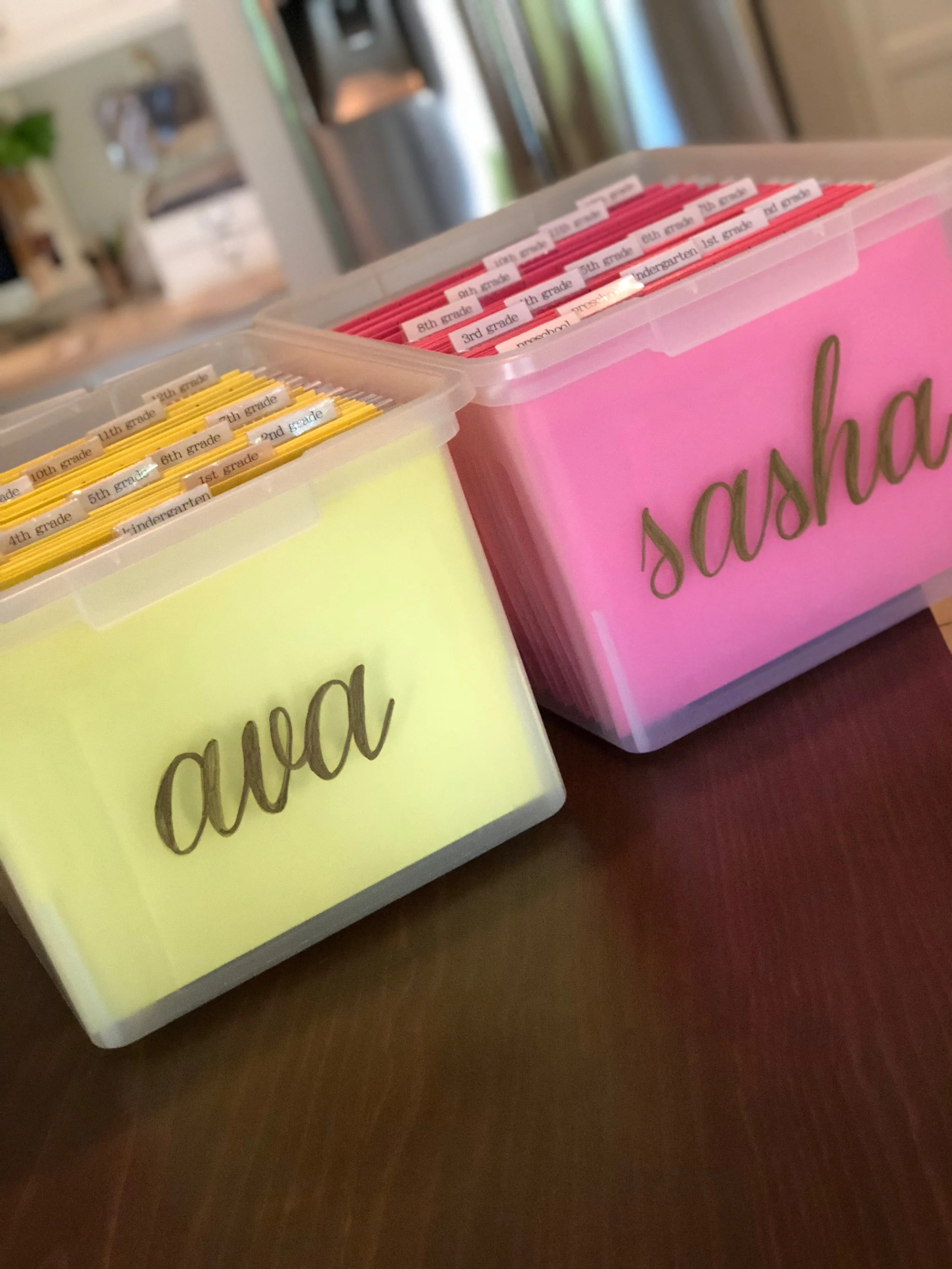
A bin per child, labeled by year or age
A file box with hanging folders for school years
A binder with sheet protectors for artwork
The key is consistency. When something comes home, decide right away: keep, toss, or display.
Go Digital (Without Losing the Sentiment)
Not everything needs to live in physical form. Taking photos of artwork, certificates, or bulky projects can save a ton of space while still preserving the memory.
You can:
Create a digital album for each child
Store items by year
Even turn favorites into a printed book later
Bonus: digital collections are easy to share with family and easy to replace if (God forbid) disaster strikes. Artkive is a favorite online service for turning digital collections into books.
Limit the Space:
Give yourself a boundary. For example, one bin per child. When it fills up, it’s time to edit.
This keeps things from quietly expanding into closets, attics, and every spare corner of your home. It also encourages you to keep only what truly matters.
Let Go of the Guilt
This might be the most important part. Keeping everything doesn’t make you a better parent. What matters is the love, attention, and memories behind those items – not how much you save.
By collecting thoughtfully, you’re actually making the memories easier to revisit and enjoy in the future.
Final Thought
Your child’s story isn’t in every single piece of paper – it’s in the moments they represent. Save the best, let go of the rest, and create a collection that feels joyful, not overwhelming